

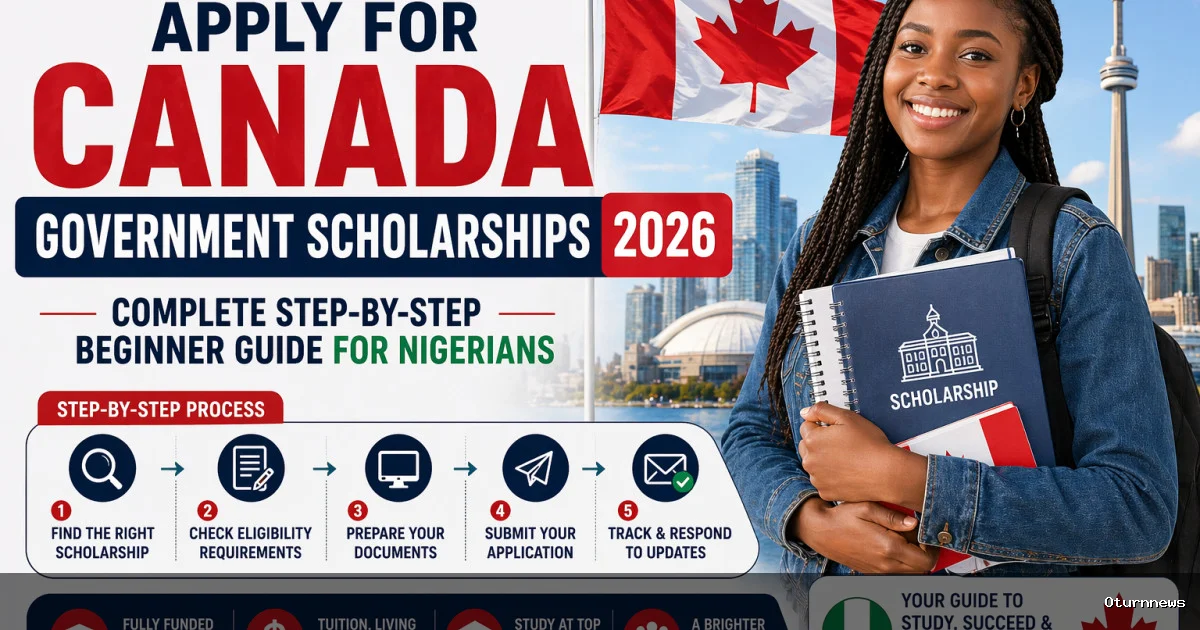
Applying for a Canadian scholarship as a Nigerian student for the first time can feel overwhelming. The terminology is unfamiliar, the system is different from what you know, and the stakes feel high. But the application process becomes manageable and even straightforward once you understand its structure and the logic behind each step. This complete beginner's guide walks you through the entire Canadian scholarship application process from start to finish so you know exactly what to do and in what order.
Step One: Understand the Type of Scholarship You Are Applying For
Before you write a single word of your application, you need to understand what type of scholarship you are targeting because government scholarships, university scholarships, and foundation scholarships each have different application routes and different selection criteria.
More in Scholarships
- Fully Funded Canada Scholarships 2026 for International Students: Every Major Programme Explained
- Masters Scholarships in the UK 2026 with Full Funding: Top Universities, Courses and Application Guide for Nigerians
- UK Scholarships 2026 for Low GPA Students: Which Awards Accept Second Class Lower and Below
- UK Scholarships 2026 for Nigerian Students: Full List, Requirements, Deadlines and How to Apply
- Chevening Scholarship 2026: Full Eligibility, Benefits, and Step-by-Step Application Guide for Nigerian Students
Government scholarships like Vanier are administered by federal agencies and applied for through university nominations. You cannot apply directly to the Canadian government for a Vanier scholarship. Your application goes through a Canadian university and the university nominates you.
University scholarships are applied for as part of your university admissions application. When you submit your application to a Canadian university, you are simultaneously considered for any entrance scholarships you are eligible for. You do not always need to complete a separate scholarship application form.
Foundation scholarships like Mastercard Foundation have their own standalone application processes through the foundation's website or through partner university portals. These require separate applications with specific essay questions and selection criteria distinct from the university admissions process.
Step Two: Identify Your Target Universities and Supervisors
For PhD and research Master's applications, identify three to five Canadian universities where faculty members are working on research topics that align closely with your interests. Visit the department websites, read recent publications from faculty in your area, and identify two or three supervisors whose work genuinely interests you.
Write personalised inquiry emails to each supervisor. Keep the email short, approximately three to four paragraphs. Introduce yourself, briefly describe your academic background, mention one or two specific papers or projects of theirs that you have engaged with, and explain what research direction you are hoping to pursue. Ask whether they are currently accepting students and whether they would be open to discussing your application.
Step Three: Prepare Your Application Documents
The standard documents required for a Canadian scholarship application include your academic transcripts from all previous institutions, your research proposal or statement of purpose, your curriculum vitae, two or three reference letters, and proof of English language proficiency unless you qualify for an exemption.
Your statement of purpose is the most important document you will write. It should be three to four pages that clearly describe your academic background, your research interests and how they developed, what specific research questions you want to pursue in Canada, why the specific university and supervisor you are applying to are the right fit for your work, and what you plan to do with your qualification after graduating. Write it in plain, direct language that a non-specialist could follow. Avoid jargon-heavy passages that obscure rather than communicate your ideas.
Your research proposal, required for PhD applications, should be five to ten pages covering the research problem you want to address, why it matters, what is already known from existing literature, what specific questions or hypotheses your research will explore, and what methodology you will use. It does not need to be a complete and final research plan. It needs to demonstrate that you can think rigorously and systematically about research problems in your field.
Step Four: Submit Your Applications in the Right Order
Submit your admissions applications first. Most Canadian universities have PhD admissions deadlines between December and February for September entry. Once you receive an admission offer, you can proceed with scholarship applications that require proof of admission or that are conditional on being admitted.
For scholarships that have their own independent timelines like Vanier, work with your supervisor to submit the nomination package before the university's internal nomination deadline, which is typically several weeks before the government's external deadline.
Step Five: Prepare for Possible Interviews
Some Canadian scholarship programmes including Mastercard Foundation conduct formal interviews as part of their selection process. If you are shortlisted for an interview, prepare by reviewing your application thoroughly, being ready to discuss your research interests in depth, and thinking carefully about how you will answer questions about your leadership experience, community contributions, and plans for using your Canadian education to create impact after your studies.
Practice speaking clearly and confidently about your research and your goals. The interview is not a test of whether you can reproduce your written application verbally. It is an opportunity to show the selection committee who you are as a person and as a future scholar, beyond what the written documents can convey.
After Submitting Your Application: What Happens Next
Once you have submitted your Canadian scholarship application, the waiting period begins. Different programmes have different timelines for communicating results. Vanier nominations are reviewed over several months and results are typically communicated to applicants through their nominating university. Mastercard Foundation notifications usually come within two to three months of the application closing date. University entrance scholarship decisions often come alongside the admissions decision itself.
Use the waiting period productively. Continue researching your target field, maintain contact with your potential supervisor, explore accommodation options in your target city, and prepare your English language documentation in case it is needed. If you receive a rejection, request feedback immediately and use it to strengthen your next application. Many Nigerian students who are now studying in Canada on full scholarships applied more than once before succeeding.
Frequently Asked Questions About Applying for Canadian Scholarships
How many Canadian scholarships can I apply for at the same time?
There is no limit to how many scholarships you can apply for simultaneously. In fact, applying to multiple programmes is the standard strategy among successful international scholarship seekers. Apply for every scholarship for which you genuinely qualify and submit the strongest possible application to each one. Winning one will be enough. Applying to only one is a significant strategic risk.
Do Canadian universities charge an application fee for international students?
Most Canadian universities charge an application fee for international students, typically ranging from one hundred to two hundred Canadian dollars per application. Some universities waive this fee for scholarship applicants or for students from developing countries. Check each university's admissions page for details on fee waivers before submitting your applications.
Can I defer my Canadian university admission if I do not get a scholarship in the first round?
Many Canadian universities allow admitted students to defer their start date by one academic year, though policies vary. If you are admitted without scholarship funding and want to wait and apply for funding in the next cycle, ask the admissions office about deferral options before declining the offer. Some universities will hold your admission while you reapply for funding, which is a useful option if your academic profile is strong enough to have earned the admission in the first place.



Comments
Leave a Comment
All comments are reviewed before publishing.