
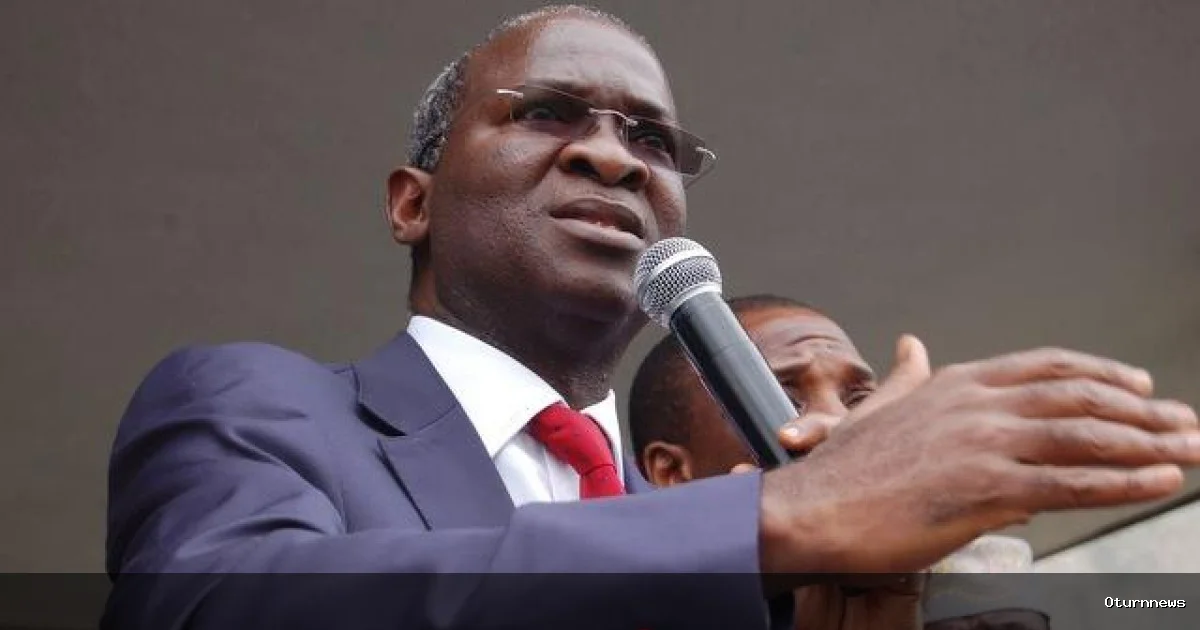
Babatunde Fashola, the former Lagos State Governor and two-time federal minister whose tenure at the Ministry of Works and Housing produced some of the most visible infrastructure outputs of the Buhari administration, has been appointed as the Chairman of the Nigerian Electricity Regulatory Commission. The appointment brings one of Nigeria's most experienced infrastructure administrators into direct oversight of the power sector at a moment when the country's electricity crisis remains one of the most pressing governance challenges facing the Tinubu administration.
More in Politics
- Kano Governor Abba Yusuf Submits APC Nomination Form for 2027 Governorship Election
- Senate Reverses Controversial Rule as INEC Declares Security Top Priority for 2027 Elections
- Hayatu-Deen Picks N100 Million ADC Presidential Form Becoming First Official 2027 Aspirant
- Bala Mohammed Speaks: Former Bauchi Governor Addresses 2027 Presidential Ambitions and Coalition Plans
- Adeleke Speaks at Workers Day Rally, Faults APC Manifesto and Gets NLC Endorsement for Re-election
Fashola's appointment was confirmed through an official government announcement and has been received with cautious optimism by energy sector stakeholders who have long argued that the NERC requires leadership with both the technical knowledge to understand the electricity sector's complex regulatory environment and the political weight to enforce regulatory decisions against the vested interests that have historically resisted meaningful reform.
Who Is Babatunde Fashola
Babatunde Raji Fashola served as Governor of Lagos State from 2007 to 2015, a tenure widely regarded as one of the most effective periods of urban governance in Lagos's modern history. His administration oversaw significant improvements in road infrastructure, public transportation through the Bus Rapid Transit system, environmental sanitation, and the overall management of a megacity that presents governance challenges on a scale few administrators anywhere in the world face. His ability to deliver visible results within complex urban environments built a reputation for practical governance effectiveness that followed him into federal service.
As Minister of Power, Works, and Housing in President Buhari's first term and later as Minister of Works and Housing in the second term, Fashola oversaw the rehabilitation of significant road and bridge infrastructure across Nigeria. His tenure produced genuine output in the form of completed road projects and renewed attention to the quality of federal road maintenance, even if the scale of Nigeria's infrastructure deficit meant that progress was always slower than the need required.
What the NERC Role Requires
The Nigerian Electricity Regulatory Commission is the independent regulatory body responsible for regulating the electric power industry in Nigeria, covering generation, transmission, system operation, distribution, and supply of electricity. The NERC's effectiveness is central to whether Nigeria's electricity sector can attract the private investment, maintain the regulatory discipline, and build the consumer protection framework needed to move beyond the chronic generation, transmission, and distribution failures that have kept millions of Nigerians dependent on private generators for basic power supply.
Comments
Leave a Comment
All comments are reviewed before publishing.