
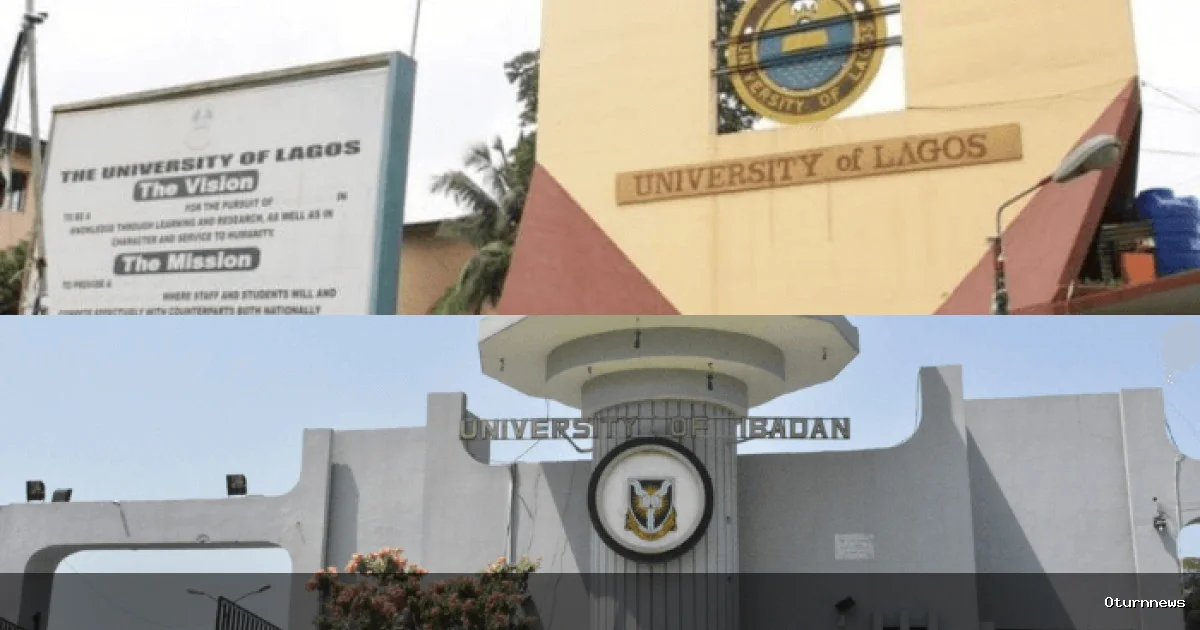
The 2026 edition of the major global university ranking systems has renewed conversation in Nigeria about the standing of the country's higher education institutions in the international academic community and what the rankings reveal about the strengths, weaknesses, and trajectory of Nigerian universities in a world where the global competition for academic talent, research funding, and international recognition has never been more intense.
More in Education
- MTN Foundation Opens 2026 Scholarship Applications for Nigerian Students Worth Up to N300,000 Annually
- JAMB UTME 2026: Results Season Begins as Millions of Nigerian Students Check Their Scores
- JAMB Registration Requirements 2026/2027: What Every Student Must Have Before Applying
- How to Register for JAMB 2026/2027: Complete Step by Step Guide for Every Nigerian Student
- Violence Rocks Ado Ekiti Community as Cult Clash Leaves One Dead Near Polytechnic Area
The University of Ibadan, Nigeria's oldest university and consistently its highest-placed institution in international rankings, maintains its position as the leading Nigerian university across multiple ranking frameworks. The institution's research output, academic staff qualifications, and the depth of its library and laboratory resources give it the strongest foundation of any Nigerian university for competing in global ranking methodologies that weight research productivity heavily.
The Major Rankings and Their Methodologies
The QS World University Rankings and the Times Higher Education World University Rankings are the two most widely referenced international ranking systems. Both assess universities across dimensions including academic reputation as measured by peer surveys, employer reputation as measured by graduate recruiter surveys, faculty-to-student ratios, research citation impact, international faculty and student proportions, and in some cases industry connections and sustainability metrics.
For Nigerian universities the greatest challenges in these rankings come from the research citation metrics, where the volume and international impact of research published by Nigerian academic staff has historically been limited by funding constraints, inadequate research infrastructure, limited access to expensive academic journals, and the brain drain that has drawn many of Nigeria's most talented researchers to universities in Europe, North America, and increasingly the Gulf states where research funding and academic salaries are substantially higher.
Progress Being Made
Despite the challenges, Nigerian universities have been making incremental progress in global rankings over recent years. The University of Ibadan, University of Lagos, Ahmadu Bello University, University of Nigeria Nsukka, and Obafemi Awolowo University are among the institutions consistently represented in the ranked segments of major global league tables. The Covenant University in Ota continues to perform above what its age and size might suggest, reflecting the benefits of focused institutional investment and clear academic mission definition.
The federal government's recent commitment to increasing research funding through the Tertiary Education Trust Fund and through bilateral research collaboration agreements with institutions in the United Kingdom, United States, and European Union represents an attempt to address the structural research funding gap that is the single most significant factor holding Nigerian universities back in global rankings. Whether those commitments translate into the sustained multi-year funding increases that producing genuinely impactful research requires will determine whether Nigerian universities make meaningful ranking progress in the years ahead.




Comments
Leave a Comment
All comments are reviewed before publishing.