
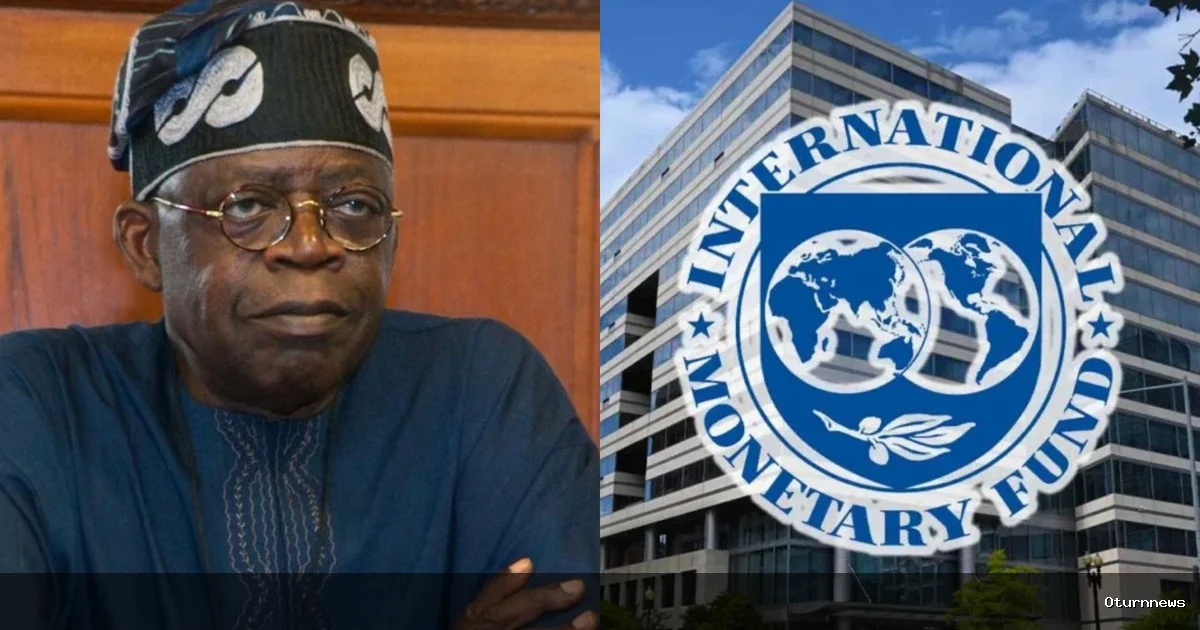
Nigeria has drawn approximately 1.5 billion dollars as the first tranche of its 5 billion dollar derivatives financing arrangement with First Abu Dhabi Bank, the United Arab Emirates' largest financial institution, pressing ahead with a complex structured transaction that has been the subject of significant scrutiny from the International Monetary Fund and international financial analysts who have raised concerns about its opacity and the potential risks it carries for Nigeria's long-term debt sustainability.
More in Business
- The Future of Business: Why Every Nigerian SME Needs a Fintech Strategy in 2026
- CPPE Warns FG Against Targeting South African Firms Over Xenophobia Saying It Harms Nigeria
- Naira Tightens Grip on Dollar Approaching N1,350 as Foreign Exchange Market Shows Stability
- Interswitch Inducts Largest Developer Cohort to Strengthen Nigeria and Africa Tech Talent Pipeline
- FG Issues Petrol Import Licences for 720,000MT to Six Marketers Amid Dangote Refinery Supply Debate
The Federal Government received the funds over the past two weeks through a Total Return Swap transaction with the UAE lender, according to Bloomberg reporting citing people familiar with the transaction. The National Assembly approved President Bola Tinubu's request to secure up to 6 billion dollars in external borrowing on March 31 2026, with the 5 billion dollar TRS facility from First Abu Dhabi Bank forming the larger component alongside a separate facility from UK Export Finance.
What Is a Total Return Swap and Why It Is Controversial
A Total Return Swap is a derivatives-based financing structure that differs significantly from a conventional loan. In a TRS arrangement, Nigeria has pledged naira-denominated securities valued at approximately 133.3 percent of the loan amount as collateral. The first tranche is priced at SOFR plus 3.95 percent, rising to SOFR plus 4 percent for subsequent tranches. The IMF's concern centres on the complexity and relative opacity of this structure compared to straightforward sovereign bond issuance or bilateral loans, and on the risk that derivatives-backed debt can expose borrowing countries to hidden liabilities that may not be fully captured in standard debt sustainability analyses.
The Fund warned specifically that such transactions are usually opaque and carry risks, citing comparable arrangements by Angola and Senegal as cases where derivative-backed loans exposed those countries to repayment difficulties when commodity prices fell. Nigeria's public debt already stands at 110.3 billion dollars as of December 31 2025, and the IMF's concern is that the TRS structure adds complexity to an already significant debt burden in ways that may not be fully understood by the broader public or even by all the relevant oversight institutions.
What the Government Says the Money Is For
The Tinubu administration has consistently argued that the 5 billion dollar facility is essential for financing priority infrastructure projects that are central to the government's economic growth agenda. Chief among these is the Lagos-Calabar Coastal Highway, a 700 kilometre road project designed to connect the southwest and the south-south of Nigeria. Additional allocations are earmarked for port rehabilitation in Lagos, with the UK Export Finance facility complementing the UAE financing to modernise Nigeria's busiest maritime hub.
The government has also indicated that a portion of the funds will be used to refinance more expensive existing debt, both domestic and external, as part of a broader debt management strategy aimed at reducing the interest burden on Nigeria's public finances. At the first tranche level of 1.5 billion dollars, the immediate impact on Nigeria's foreign reserve position and budget financing capacity is meaningful but the full implications of the 5 billion dollar total facility will only become clear as subsequent tranches are drawn and as the terms of the transaction become more publicly visible over time.
The Broader Debt Picture
Nigeria's decision to pursue this UAE financing structure reflects the difficult choices facing the federal government in an environment where traditional Eurobond issuance has become more expensive due to global interest rate conditions and the geopolitical uncertainty stemming from the Iran conflict that erupted earlier in 2026. The government has sovereign right to determine how best to finance its infrastructure needs but as Daily Trust noted in its editorial on the matter, that determination must be informed by a clear-eyed assessment of the risks rather than simply the immediate fiscal relief the facility provides.




Comments
Leave a Comment
All comments are reviewed before publishing.