
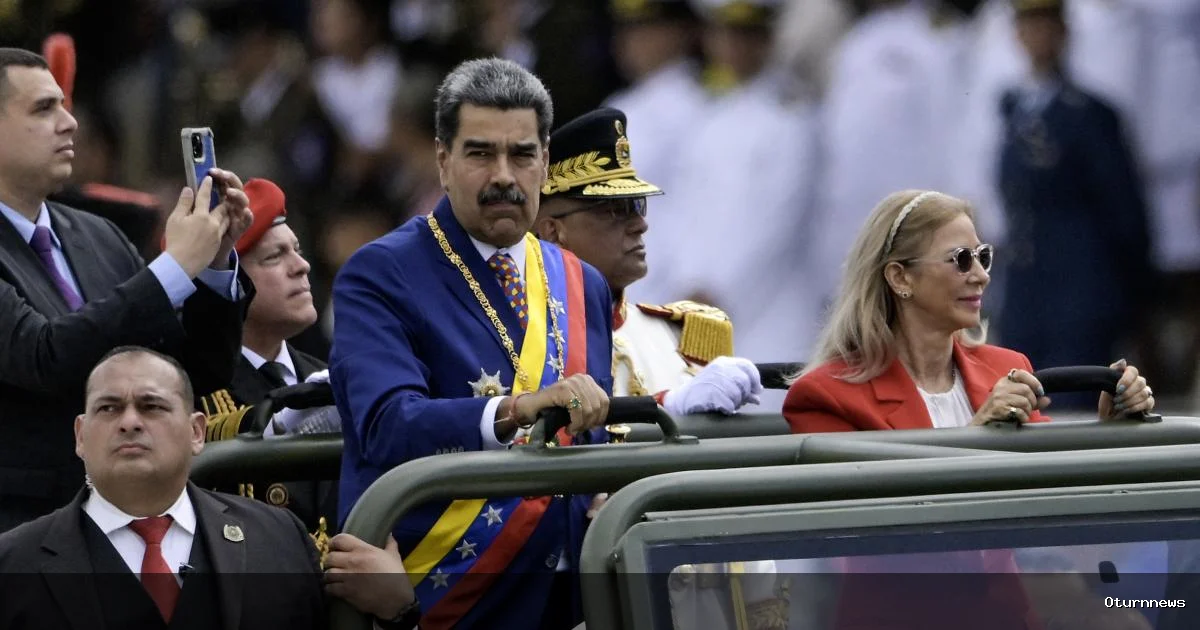
Venezuelan President Nicolas Maduro is once again at the centre of international attention as his government continues to face questions about democratic governance, human rights, and economic management at a moment when Venezuela's political crisis shows few signs of reaching a stable resolution that satisfies both domestic and international stakeholders.
Maduro, who has held power in Venezuela since 2013 following the death of Hugo Chavez, has navigated years of international pressure, economic sanctions, diplomatic isolation, and internal opposition in ways that have surprised many analysts who predicted the early collapse of his government. His survival in office has been built on a combination of military loyalty, selective economic distribution, strategic international alliances particularly with Russia, China, Cuba, and Iran, and an increasingly firm approach to dissent within Venezuela's borders.
More in World
- William Ruto Under Pressure as Kenya Faces Political Tension in 2026
- Trump Extends Iran Ceasefire as Tensions Rise Over Peace Talks
- Hezbollah Violations Prompt Netanyahu to Order Fresh Military Strikes on Lebanon Targets
- Trump Latest News: US President's Decisions Continue Reshaping Global Politics From Iran to Pakistan
- US Iran Peace Talks Collapse as Trump Cancels Pakistan Trip and Naval Blockade Tightens
The Human Cost of Venezuela's Political Crisis
The ongoing political and economic crisis in Venezuela has produced one of the largest displacement events in Latin American history. Millions of Venezuelans have left their country over the past decade in search of economic opportunity and political safety in neighbouring Colombia, Brazil, Peru, Ecuador, Chile, and beyond. The Venezuelan diaspora now extends across multiple continents and represents a humanitarian reality that international organisations and host countries continue to grapple with.
Inside Venezuela, access to essential goods, healthcare, electricity, and clean water remains deeply uneven, with significant disparities between those connected to government structures and ordinary citizens who bear the full weight of economic dysfunction. International human rights organisations have documented ongoing concerns about freedom of expression, arbitrary detention, and the treatment of political opponents.
Why Venezuela Still Matters to the World
Venezuela sits atop the world's largest proven crude oil reserves, a geological reality that gives the country strategic significance regardless of its current political condition. The potential for Venezuelan oil production to affect global supply dynamics is a factor that keeps major world powers including the United States, Russia, and China engaged in Venezuelan affairs in ways that go beyond simple human rights considerations.
For African countries including Nigeria, the Venezuelan situation serves as a cautionary tale about the risks of resource dependence, the fragility of democratic institutions under authoritarian pressure, and the devastating human consequences that follow when governance fails in oil-rich nations.
Read more on Oturnnews: International Politics and Global Affairs News
See also: Latin America News and Global Political Updates 2026
Venezuela and the African Oil Parallel
The Venezuelan experience holds cautionary lessons that are particularly relevant for oil-producing African nations including Nigeria. A country sitting on extraordinary natural resource wealth that has nonetheless experienced decades of economic mismanagement, political instability, and citizen suffering demonstrates with painful clarity that resource abundance is not a guarantee of national prosperity. The translation of natural wealth into broad-based human development requires institutional quality, governance integrity, and long-term strategic thinking that cannot be replaced by ideology or slogans regardless of how powerfully they resonate with populations hungry for change.
For Nigerian policymakers, economists, and citizens engaged with questions about how to maximise the development impact of oil revenues, the Venezuelan story remains one of the most studied and most sobering examples available.
Comments
Leave a Comment
All comments are reviewed before publishing.